Climate Label Certified: new carbon offset projects
At nanimarquina, our commitment to sustainability and social responsibility is at the heart of the way we work. As we continue to grow and innovate, we remain focused on creating products designed to generate desire, enhance people’s wellbeing and have a positive impact on the planet and the communities around us.
For us, being responsible means never stopping in our efforts to do better.
Transparency is an essential part of this commitment. We believe in openly sharing the initiatives we undertake and the progress we make, from our long-standing collaboration with Care & Fair and our circularity initiatives to the introduction of the Digital Product Passport and our Climate Label certification.
Once again, and every year since 2021, nanimarquina has achieved The Climate Label certification. But what does this mean? It means that we are funding the transition towards a more stable climate, with verified action across four key areas:
- Measuring the greenhouse gas emissions generated by the production and delivery of our products and services.
- Planning our decarbonisation journey and tracking carbon reduction actions and results.
- Funding projects that mitigate carbon emissions.
- Amplifying our impact through disclosure, advocacy and education.
Over the past year, our activity generated 2,394 tonnes of CO₂. This has translated into an investment of $XX,XXX across three different climate projects in India and Pakistan, the countries where our rugs are handwoven.
The three projects we have chosen to support are:
- Delta Blue Carbon in Pakistan
- Karnataka Regenerative Farming in India
- Bhadla Solar Project in India
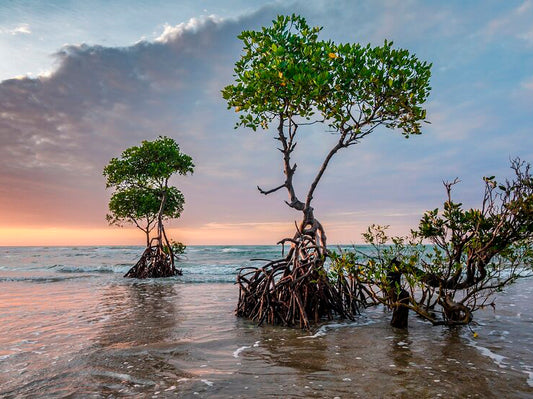
Delta Blue Carbon in Pakistan
The Delta Blue Carbon project is restoring the mangrove forests of the Indus Delta in Pakistan, which had largely disappeared by the 1980s. Beyond its climate impact, restoring this ecosystem brings significant environmental and social benefits to the region.
Mangroves have an extraordinary capacity to capture carbon, sequestering between three and five times more CO₂ per hectare than upland tropical forests. Protecting, restoring and sustainably managing these tidal wetlands has therefore become both an environmental priority and an urgent challenge for the region. In 2015, Indus Delta Capital Private Limited and the Forest and Wildlife Department of the Government of Sindh joined forces to launch the Delta Blue Carbon project.
Today, the project protects 102,000 hectares of existing mangrove forests and is rehabilitating and restoring a further 225,000 hectares of degraded and devegetated mangrove land. It is estimated to remove more than 2.4 million tones of CO from the atmosphere every year, making it the largest mangrove restoration program of its kind in the world.
Why are mangroves so important? Mangroves perform a number of essential environmental functions:
- They capture and store large amounts of CO₂. Mangroves absorb carbon from the atmosphere and store much of it not only in the trees themselves, but particularly in their roots and surrounding sediments. This carbon can remain stored for hundreds or even thousands of years, a process known as blue carbon.
- They protect coastlines. Their complex root systems create a natural barrier that helps reduce the impact of waves, storms and flooding. As sea levels rise and extreme weather events become more frequent, this natural protection becomes increasingly valuable.
- They reduce erosion. Mangrove roots trap sediments and help stabilize coastlines, protecting both natural ecosystems and the communities that live alongside them.
- They provide a refuge for biodiversity. Mangroves serve as breeding and feeding grounds for fish, crustaceans, birds and many other species. Beyond their ecological importance, they also help sustain fisheries and the livelihoods of local communities.
Protecting and restoring mangroves therefore has a double climate benefit: it helps prevent emissions while preserving an ecosystem that can continue capturing and storing carbon over time.
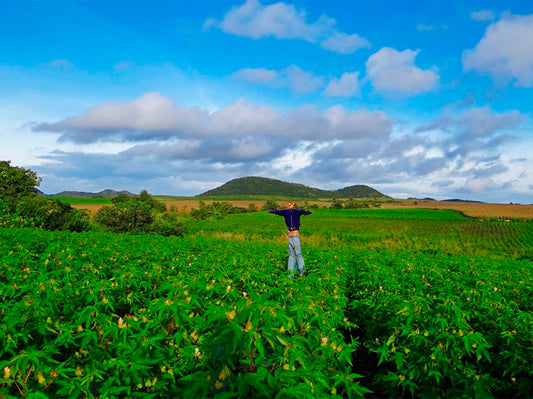
Karnataka regenerative farming in India
This project works with smallholder farmers across Karnataka, India, providing financial incentives, training and technical support to help them move away from chemical fertilizers and adopt more sustainable, organic farming practices.
By introducing techniques such as agroforestry, mulching, green manure and vermicomposting, the project helps remove carbon from the atmosphere and store it in the soil, while reducing the greenhouse gas emissions associated with conventional farming.
But its impact goes beyond carbon. Participating farmers have reported increased crop yields and a higher market value for organic produce, helping to improve both their incomes and livelihoods. By bringing together climate action, healthier soils and support for farming communities, the project takes a holistic approach to sustainable agriculture and contributes to the long term wellbeing of both people and ecosystems across rural Karnataka.
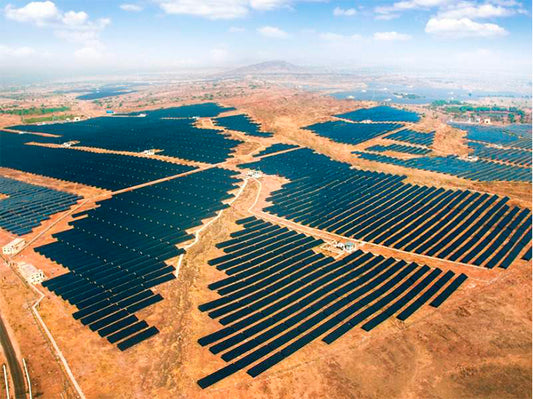
Bhadla Solar Project in India
Located in Rajasthan, India, one of the regions with the highest levels of solar irradiation in the world, the Bhadla Solar Project is a 300 MW grid-connected photovoltaic solar power plant certified under the Gold Standard.
The facility generates approximately 741,845 MWh of renewable electricity each year. By replacing electricity that would otherwise come from India’s fossil fue -dominated grid, the project is estimated to avoid around 693,327 tonnes of CO₂ emissions annually.
The project contributes to India’s transition towards renewable energy by increasing the amount of clean electricity available to the grid and reducing reliance on coal-based power generation. At the same time, it creates local employment opportunities through the construction and operation of the facility.
Together, these three projects reflect different but complementary ways of addressing the climate challenge: restoring natural ecosystems, transforming agricultural practices and accelerating the transition towards renewable energy.